Schoolyard Project
This exciting project provides the students of Coronation Elementary School with an inviting outdoor space for learning and expressing creativity. This project also aims to increase accessibility on school grounds, revitalize the existing gardens, establish new garden areas using native plants, and recognize and honour Canada’s Indigenous peoples.
Working in phases, the School is partnering with Coronation School Council as well as the North Glenora Sustainability Committee – a standing committee of the North Glenora Community League – to complete this project. The plan involves students, staff, and residents of the community, harnessing the establishment of the site as an educational opportunity as it develops.
Highlights of the project include:
- Volunteer and Donor Information
- Engagement with Coronation School Students and Teachers
- Engagement with North Glenora Community Members
- Revitalization of the Native Plant Garden
- Building an Outdoor Classroom
- Truth and Reconciliation
- Increasing Accessibility
- Resources

Volunteer and Donor Information
Volunteer Here!Engagement with Coronation School Students and Teachers
In June 2024, the Project Team met with grades 2, 3, and 6 students at Coronation School to share what the schoolyard naturalization and outdoor classroom project is, ask for their feedback, and ask for their support in championing the schoolyard naturalization. We gave a short overview presentation of the project and then asked the students to each create a clay heart that we will plant in the schoolyard. This emphasized the students’ connection to the school and its land. It was also a link to Indigenous reconciliation, as heart gardens honour residential school survivors and their families, as well as the legacy of the Truth and Reconciliation Commission of Canada. Each heart also represents the memory of a child lost to the residential school system, and the act of planting represents that individual’s commitment to finding their place in reconciliation.
Approximately 60 students attended the kickoff event, and 28 students submitted feedback following our school visit to share what they are most excited about in the schoolyard naturalization plan and ideas for other things to do in the space.


Engagement with North Glenora Community Members
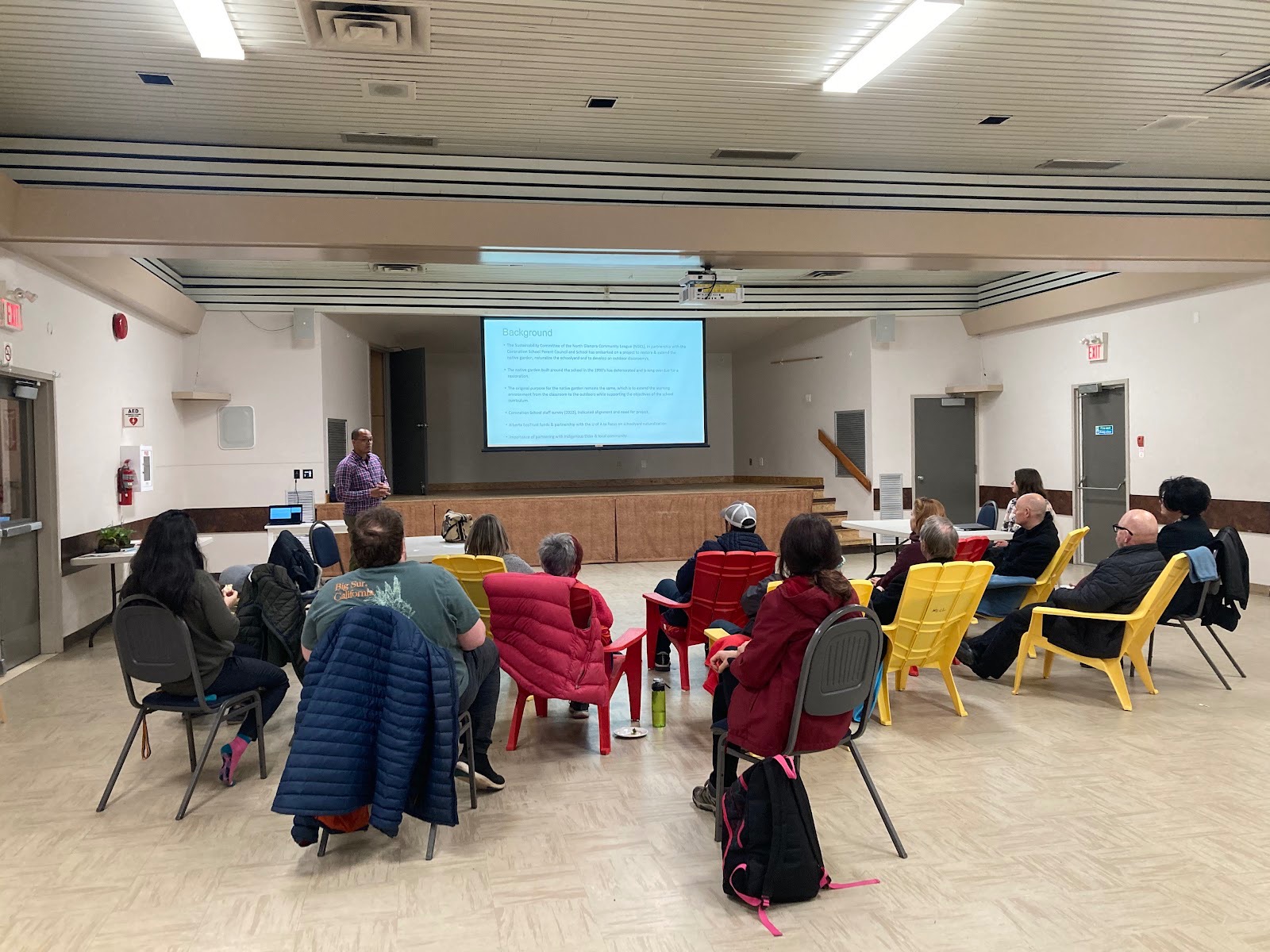
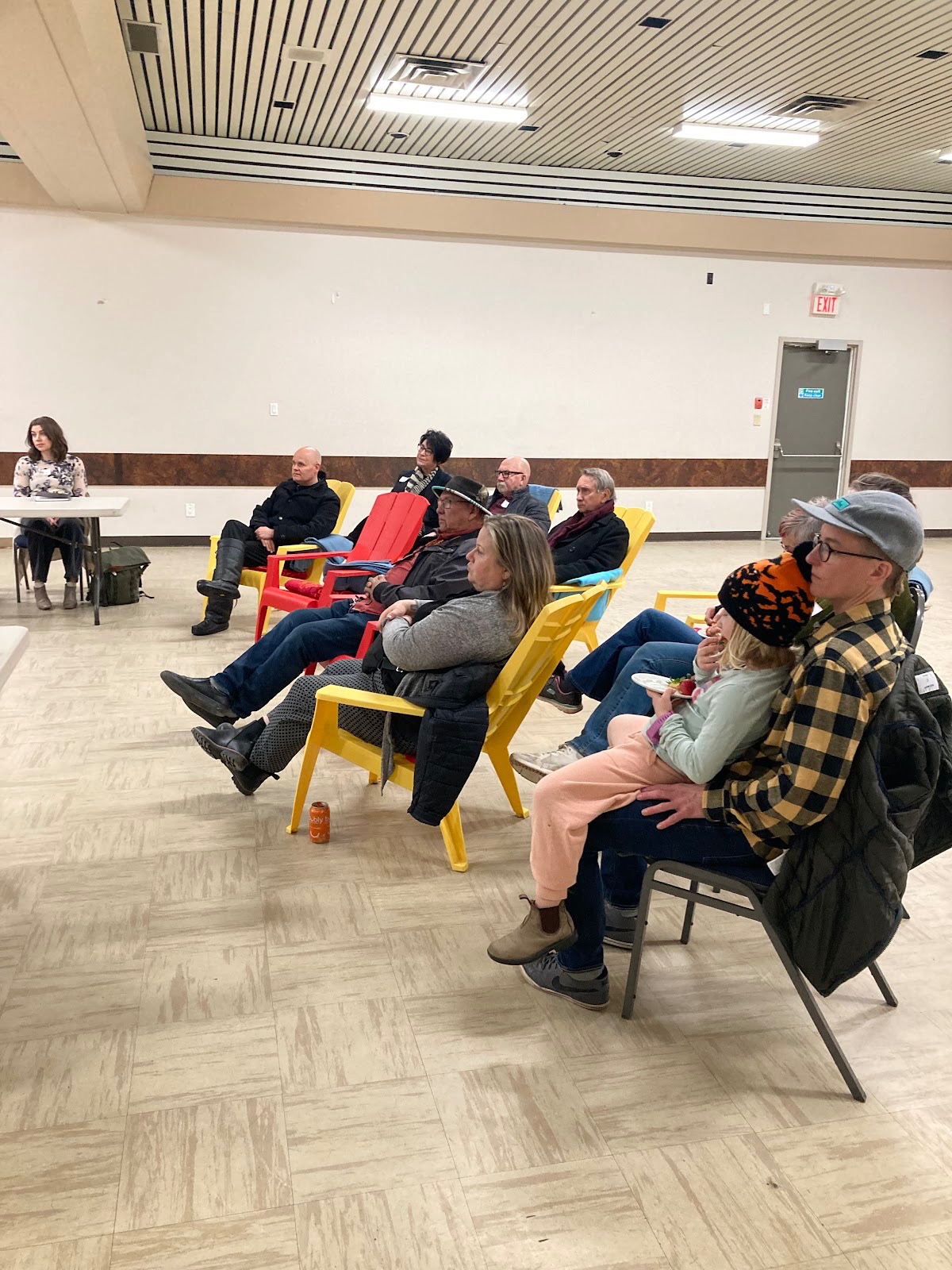
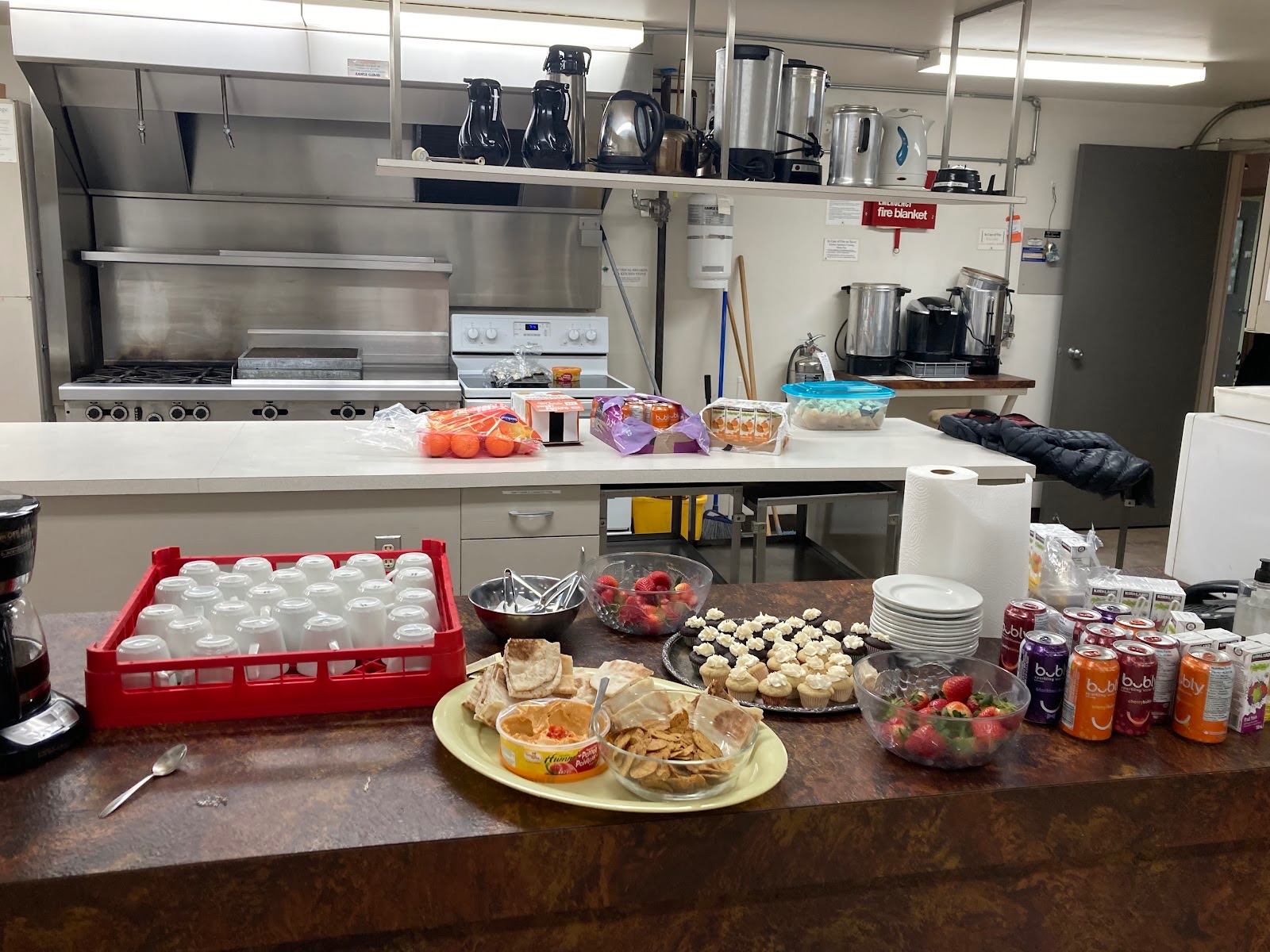
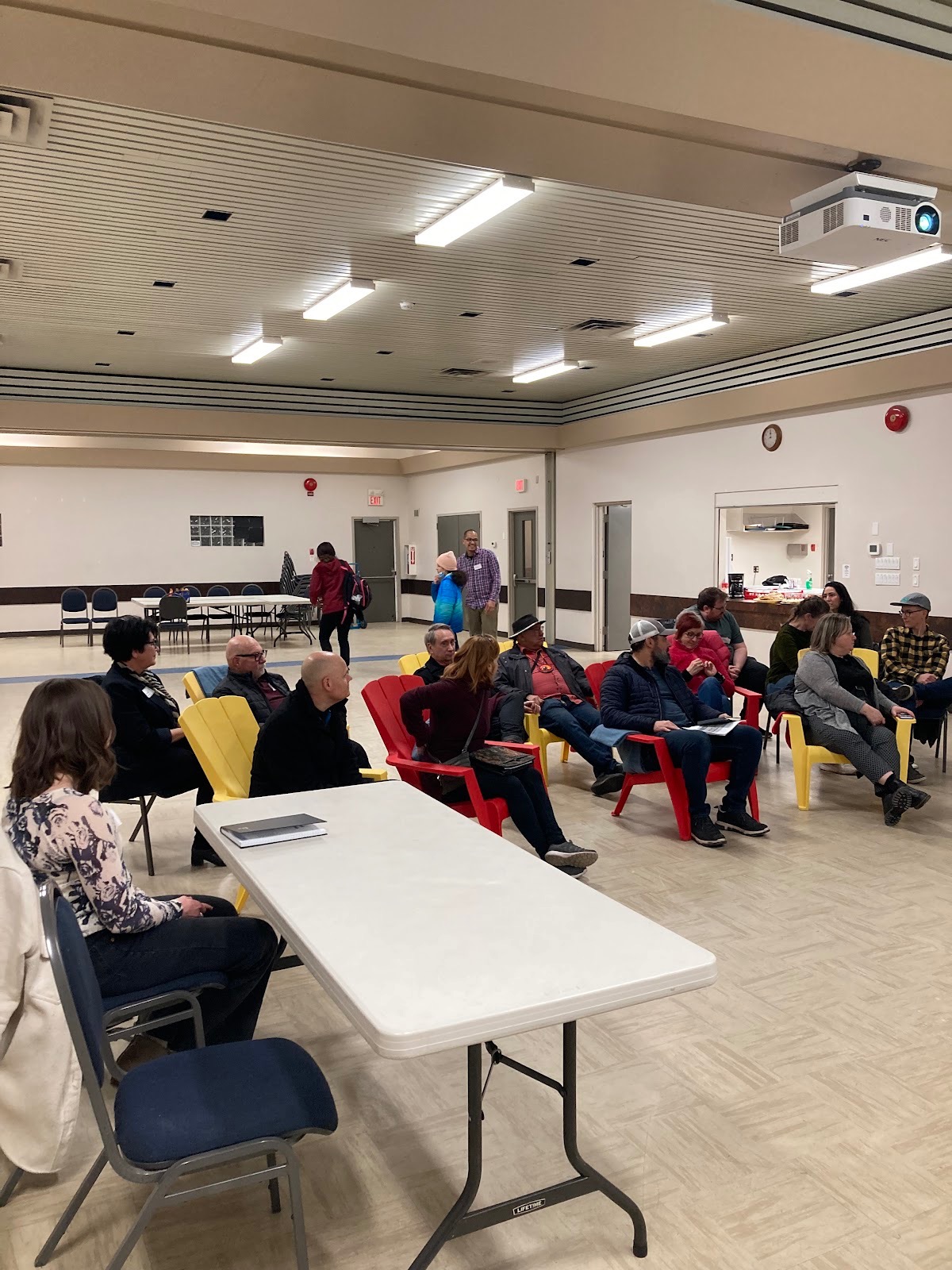
On February 1, 2024, the Team hosted a community project kickoff. Elder Phillip Campiou performed a smudge to start the project in a good way and an overview of the project was presented. Attendees were then invited to share their feedback using sticky notes to share thoughts on specific aspects of the project.


Revitalization of the Native Plant Garden
In the mid-90s, a landscaper designed and installed a garden area on the site. The design included many native plants. However, over the years, some plants died and others required transplanting to other locations.
In March 2024 the Project team hosted a workshop to inform the design of the native plant garden for the school’s front yard. Community members connected, were introduced to principles of garden design and native grassland plants to be used in the garden, then drew their own designs. These drawings were used to create the final garden design.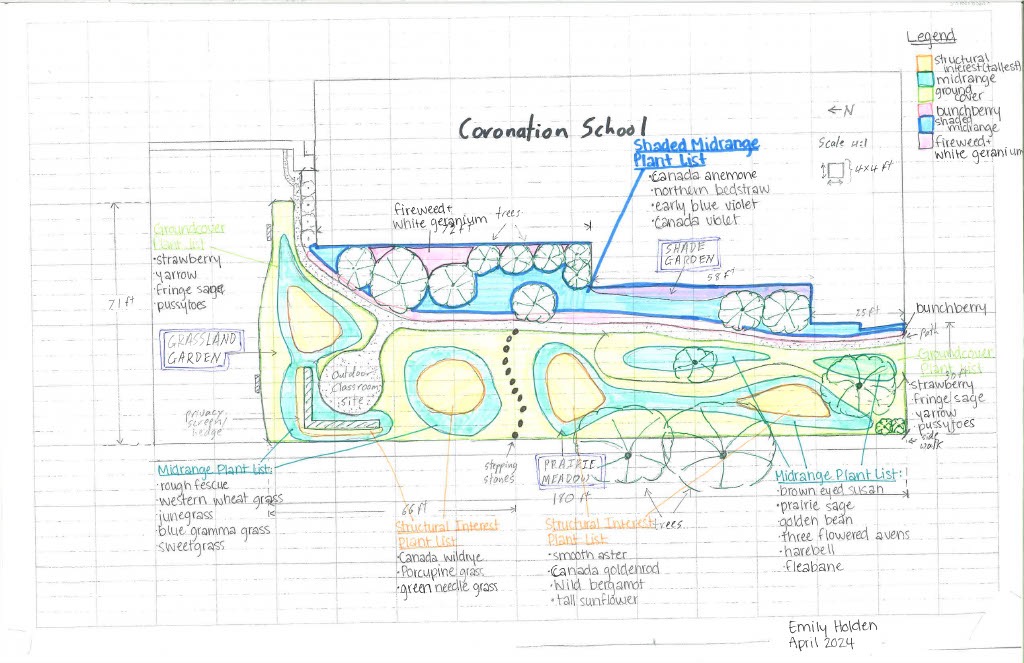 We sampled the schoolyard’s biodiversity in August 2024 to document the baseline biodiversity baseline at the site. With the help of neighbourhood volunteers, two graduate students conducted plant and insect sampling in the schoolyard. Emily created an inventory of all the vascular plants present in the schoolyard, and Lesa used a combination of sweep netting, blue vane traps, and pitfall traps to sample insects. They found 59 plant species and 21 insect taxa!





Project Maps
Click on the images below to see layout details.
-

- Full Project Map

-

- Project Map Part 1

-

- Project Map Part 2

Project Timeline
Click on the dates below to see details of the timeline.
Phase 1 – Revitalization of native garden
In the mid-90s, a landscaper designed and installed a garden area on the site. The design included many native plants. However, over the years, some plants have died and there are many new trees and plants that require transplanting to other locations.
This phase will focus on cataloging existing plants, clearing and pruning overgrowth as well as reinstalling edging along a pathway, restoring the path itself, and planting new native, shade-loving plants in the areas where they are lacking.
Phase 2 – Development of the Outdoor Classroom
The North Glenora Sustainability Committee, the staff and students of Coronation School, the Community League, and the EPSB are working together to establish an outdoor classroom for Coronation School. The need for outdoor classroom facilities was magnified by the pandemic and the desire for an outdoor learning space was identified as a priority by teachers in a staff survey conducted at the outset of this project.
The outdoor classroom will be constructed during the fall of 2024 and will include natural log seating, a weather-proof covered chalkboard, and a pathway and ramp for accessibility.
Phase 3 – Schoolyard Naturalized Gardens
During this phase, the remainder of the front yard area (about 20% of the schoolyard) will be naturalized with native plants selected specifically for their ability to sequester high amounts of CO2. The project aims to weave Indigenous knowledge throughout by partnering with Indigenous Elders and integrating elements and references to Truth and Reconciliation throughout.
A Peace Garden and a Truth and Reconciliation Garden will also be established during this phase. The Peace Garden will primarily be student-led and the Truth and Reconciliation Garden will be developed with a cultural educator and Indigenous community partners. Elements and references to Truth & Reconciliation will be integrated throughout the schoolyard garden site.
Phase 4 – Increase Accessibility
Pathways and ramps will be added for safe and easy access to the outdoor classroom and garden areas to ensure that those students with mobility issues will be able to easily access all outdoor learning opportunities.
Currently there are no accessibility considerations for students or staff with mobility challenges.
Sponsors and Acknowledgements